
Vietnam high pressure die casting is becoming a strategic manufacturing solution for OEMs seeking precision engineering, commercial scalability, and stable export infrastructure. As global buyers diversify supply chains, Vietnam high pressure die casting offers competitive cost structures, strong A380 aluminum capability, and reliable large-volume production.
This guide explains how Vietnam high pressure die casting supports commercial programs requiring tight tolerances, repeatability, and consistent quality control for U.S. and EU markets.
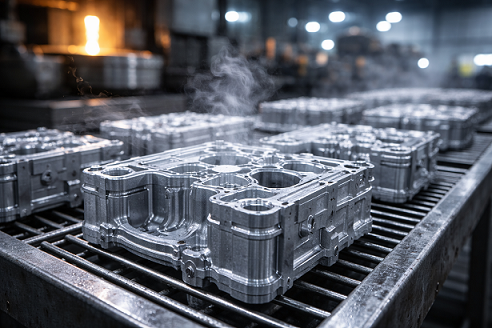
Why Vietnam High Pressure Die Casting Is Expanding Globally
Vietnam high pressure die casting has developed rapidly over the past decade due to heavy investment in industrial parks, automation systems, and metallurgical laboratories. As a result, suppliers now serve automotive, industrial equipment, EV, and electronics sectors.
Key growth drivers include:
• Competitive labor structure compared to China and Eastern Europe
• Expanding tooling engineering capabilities
• Strong trade agreements such as CPTPP and EVFTA
• Increasing specialization in A380 aluminum applications
Manufacturing contributes over 24% of Vietnam’s GDP, strengthening the long-term reliability of large-scale die casting operations.
What Is Vietnam High Pressure Die Casting (HPDC)?
Vietnam high pressure die casting refers to the process of injecting molten aluminum into hardened steel molds under extremely high pressure. This method enables high dimensional accuracy, strong mechanical performance, and minimal post-machining requirements.
The process is ideal for:
• Complex geometries
• Thin-wall components
• High repeatability production
• Large batch manufacturing
By reducing secondary machining time, Vietnam high pressure die casting improves cost efficiency in commercial programs.
Vietnam High Pressure Die Casting for Large Volume Production
Vietnam high pressure die casting facilities operate automated casting cells with robotic extraction, trimming presses, and inline inspection systems. Annual capacity often ranges from tens of thousands to millions of units.
A typical production workflow includes:
• Tool design and mold simulation
• Steel die fabrication
• Trial casting validation
• Mass production
• Secondary CNC machining
• Surface finishing
• Final inspection and export packaging
Integrated machining and finishing allow manufacturers to reduce lead time and improve supply chain coordination.
A380 Aluminum in Vietnam High Pressure Die Casting
A380 aluminum is widely used for high-pressure die casting. As trusted Aluminum die casting Vietnam suppliers, we utilize this alloy to produce durable, lightweight, and high-performance components for automotive, electronics, and industrial applications.
Key properties include:
• Excellent fluidity
• Good pressure tightness
• Strong mechanical stability
• Cost-effective material availability
Compared to other alloys, A380 aluminum offers improved durability in automotive and structural applications.
Quality Systems in Vietnam High Pressure Die Casting
Export-focused Vietnam high pressure die casting suppliers operate under strict international standards, including:
• ISO 9001
• IATF 16949
• ASTM compliance
• RoHS and REACH regulations
Quality control infrastructure commonly includes:
• Spectrometer material verification
• X-ray porosity detection
• CMM dimensional inspection
• Mechanical testing
• PPAP documentation
Full traceability systems ensure batch-level transparency from raw material to shipment.
Cost Advantage of Vietnam High Pressure Die Casting
Vietnam high pressure die casting provides competitive landed cost compared to traditional sourcing regions.
Strategic advantages include:
• Lower geopolitical risk
• Favorable tariff positioning
• Competitive tooling cost
• Efficient logistics access
When evaluating total landed cost, buyers often find Vietnam high pressure die casting delivers balanced pricing and risk mitigation.
Engineering and Tooling Strength in Vietnam High Pressure Die Casting
Engineering capability is a core differentiator. Many suppliers offer:
• Mold flow simulation
• Design for Manufacturing consultation
• Rapid prototyping
• Tool lifespan optimization
Early-stage engineering improves casting yield and reduces scrap rate, increasing commercial efficiency.
To explore full production capabilities, engineering expertise, and scalable manufacturing solutions, visit our Vietnam die casting page.
Industries Using Vietnam High Pressure Die Casting
Vietnam high pressure die casting supports:
• Automotive transmission housings
• EV motor casings
• Agricultural machinery components
• Industrial pump bodies
• LED lighting enclosures
• Telecom structural frames
The combination of aluminum performance and scalable production makes the process suitable for safety-critical applications.
Sustainability in Vietnam High Pressure Die Casting
Modern facilities invest in:
• Energy-efficient melting furnaces
• Aluminum recycling systems
• Wastewater treatment
• Environmental compliance programs
Because aluminum is fully recyclable, Vietnam high pressure die casting aligns with ESG procurement standards.
Frequently Asked Questions About Vietnam High Pressure Die Casting
- Which industries rely on Vietnam high pressure die casting?
Automotive, EV, agricultural equipment, lighting, and industrial machinery. - Why is A380 aluminum commonly used?
It offers strong castability and corrosion resistance for structural components. - What is tooling lead time?
Typically 30–45 days depending on mold complexity. - Can suppliers meet automotive standards?
Yes, many operate under IATF 16949 and provide PPAP documentation. - How competitive is total landed cost?
Vietnam high pressure die casting often provides balanced cost and supply stability advantages.
Start Your Vietnam High Pressure Die Casting Project
Vietnam high pressure die casting combines precision, scalability, and export readiness. Whether your project requires A380 aluminum housings or structural parts, Vietnam offers a reliable commercial manufacturing base.
Contact our engineering team today to review drawings, annual volume, and quality specifications. We will provide a detailed feasibility assessment and structured production roadmap.