
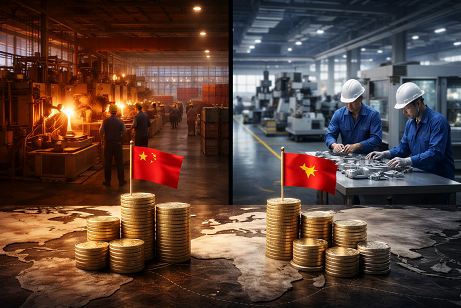
IIs Vietnam die casting cost 2026 lower than China?
Many global OEM buyers are asking the same question: Is Vietnam die casting cost 2026 lower than China?
The answer depends on how cost is calculated. While ex-works pricing may appear similar at first glance, total landed cost often tells a different story. When labor rates, tooling investment, energy stability, tariff exposure, and quality performance are evaluated together, Vietnam frequently delivers measurable savings.
Therefore, instead of focusing only on unit price, buyers should examine the full cost structure.
Labor Rates Comparison in 2026
Labor rates remain one of the clearest structural differences between the two countries.
In 2026:
China industrial regions average USD 6–8 per hour.
Vietnam manufacturing zones average USD 3–4.5 per hour.
As a result, Vietnam maintains a 35–50 percent labor advantage.
However, aluminum die casting is capital-intensive. Labor typically represents only 10–20 percent of total cost in high pressure die casting operations. Consequently, labor savings alone do not automatically create a dramatic price gap. Instead, savings accumulate when combined with lower overhead and operating costs.
Moreover, productivity in Vietnamese factories has improved significantly due to automation upgrades and export-driven management systems.
Tooling Investment and Mold Pricing
Tooling cost plays a critical role in overall project economics.
For medium-complexity molds, Vietnam typically offers 10–20 percent lower mold pricing compared to China. This advantage is driven by lower engineering labor cost and reduced factory overhead.
On the other hand, China still retains strength in ultra-high-volume automotive tooling programs. Its mature Tier 1 ecosystem enables extreme scale efficiency.
Therefore, Vietnam die casting cost 2026 becomes particularly competitive in mid-volume programs under 500,000 units annually.
Die Casting Quality Standards Vietnam vs China
Cost comparison must always be aligned with quality.
In the past, China maintained a clear quality ecosystem advantage. However, the gap has narrowed considerably.
Today, many Vietnamese suppliers hold:
ISO 9001 certification
IATF 16949 certification
ISO 14001 environmental compliance
RoHS and REACH conformity
As a result, die casting quality standards Vietnam vs China are comparable for most industrial, EV housing, lighting, and machinery components.
Because quality parity has improved, cost efficiency becomes more relevant in sourcing decisions.
Energy and Operating Stability
Raw aluminum pricing is globally linked to LME benchmarks, so material cost difference remains minimal.
Nevertheless, operating cost structures differ.
China faces stricter environmental regulation and electricity pricing volatility. Meanwhile, Vietnam benefits from stable industrial electricity pricing and manufacturing incentives.
Since melting and furnace operations account for up to 25 percent of die casting cost, energy stability contributes to predictable pricing in Vietnam.
Tariff and Trade Impact
Geopolitical exposure continues to influence sourcing strategy.
China exports to the US and EU may face Section 301 tariffs or anti-dumping investigations. In contrast, Vietnam benefits from CPTPP participation and EVFTA trade agreements.
Consequently, total landed cost from China can increase by 10–25 percent depending on product classification. Under such circumstances, Vietnam die casting cost 2026 becomes structurally more attractive.
Logistics and Shipping Comparison
Transit times are similar between the two countries.
China to US West Coast averages 18–25 days.
Vietnam to US West Coast averages 20–28 days.
Freight rates are generally comparable. However, Vietnam currently experiences lower port congestion risk compared to major Chinese hubs.
Therefore, logistics does not eliminate Vietnam’s cost advantage.
Total Landed Cost Perspective
To properly evaluate Vietnam die casting cost 2026, buyers must calculate:
Unit price
Tooling amortization
Labor and overhead
Energy cost
Quality risk
Tariffs
Freight
Inventory carrying cost
Supply chain stability
When all factors are combined, Vietnam often delivers an 8–18 percent total landed cost advantage for mid-volume export programs.
For extremely high-volume automotive platforms, cost differences narrow due to China’s industrial scale.
When Vietnam Offers Stronger Cost Efficiency
Vietnam is typically more competitive when:
Project volume is moderate
Tariff exposure exists
Engineering flexibility is required
Supply diversification is part of risk strategy
Conversely, China may remain competitive for multi-million-unit programs requiring deep automotive clustering.
Therefore, the decision should be based on project profile rather than headline pricing.
Die Casting Cost 2026: China vs Vietnam Comparison
For buyers asking Is Vietnam cheaper than China for aluminum die casting in 2026, Die Casting Cost 2026: China vs Vietnam Comparison provides a clear analysis of labor costs, material pricing, tariffs, logistics, and production efficiency. This comparison helps manufacturers and sourcing managers make informed decisions based on total landed cost and long-term supply chain stability.
Final Conclusion
Vietnam die casting cost 2026 is frequently lower than China when total landed cost is evaluated comprehensively. Lower labor rates, competitive tooling investment, stable operating cost, and favorable trade agreements contribute to measurable savings.
Nevertheless, sourcing strategy should focus on cost, quality, and risk balance rather than price alone.